
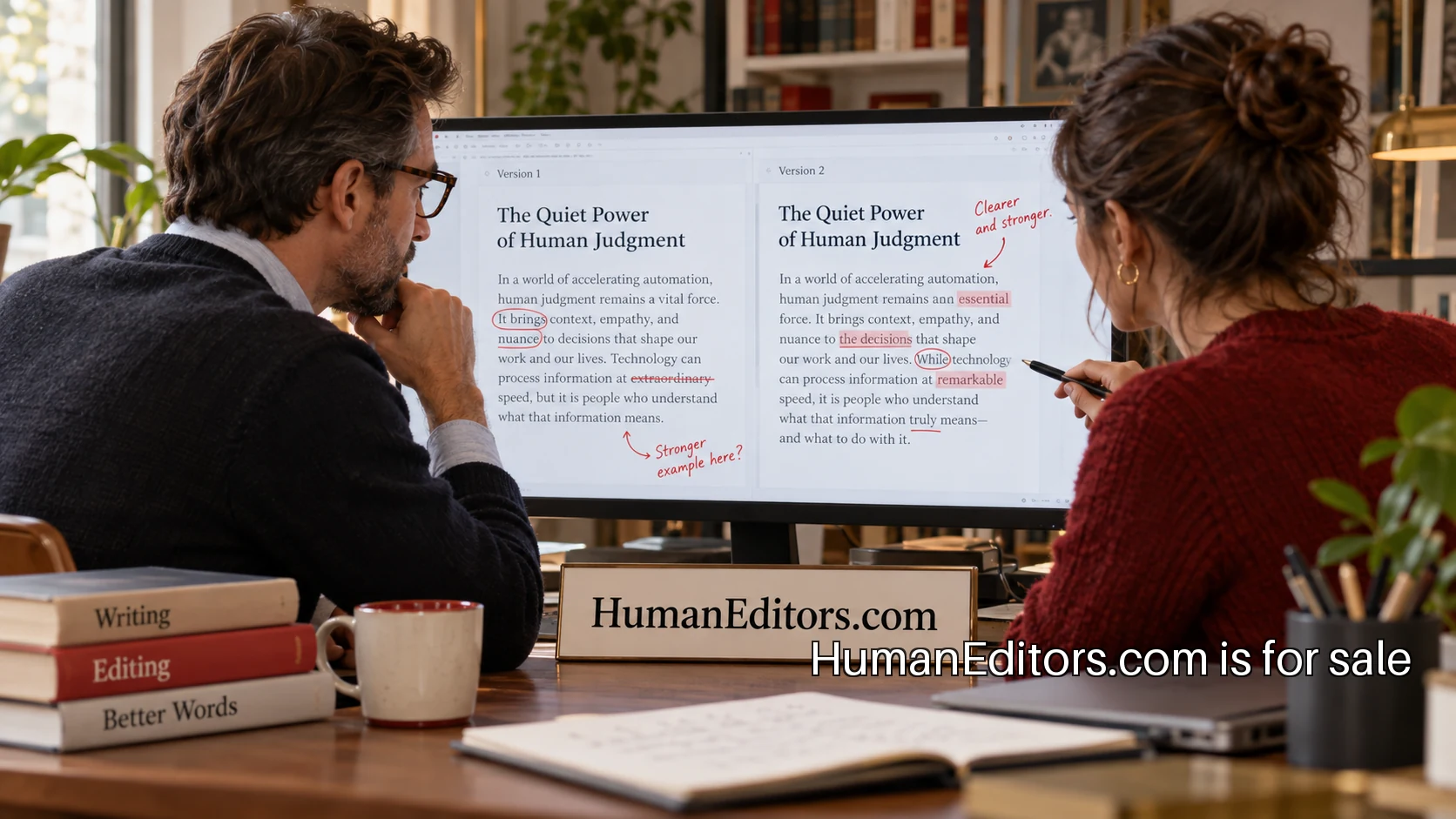
A small editorial studio can begin with a very specific promise: a named person will take a manuscript through an agreed stage of work and explain the decisions that need the author's attention. HumanEditors gives that studio an identity that puts editorial judgment in the introduction. The founder can start with a few kinds of assignment and build a process that the whole team can describe in ordinary language.
The first choice is a reader and a document type. A studio that edits research reports for charities has a different working week from one preparing independent nonfiction books. Pick a combination that supports repeatable decisions. For a report studio, that might mean checking argument, terminology and reading order before a designer begins page layout. The offer can be precise enough that a prospective client knows which file to send for a sample assessment.
Give the first service a boundary
Imagine an incoming report with an executive summary, six chapters and a set of charts. The client asks for a final polish, but the recommendations do not match the findings. A studio needs a way to say that the document requires structural attention before a sentence edit. A short assessment can identify those issues, distinguish them from straightforward corrections and offer a suitable next assignment.
Write the service description around the decisions being made. A structural review could return an annotated outline and a prioritized revision memo. Copyediting could return tracked changes, a style sheet and author queries. Proofreading could check a designed proof against a stable brief. Each deliverable should have a clear place in the publishing sequence. The founder can then introduce the studio through the work it accepts and the handoff it provides.
The CIEP's introduction to editing and proofreading is a useful starting point for naming different stages. A studio still needs its own agreement about scope. It can describe the expected input, the editor's authority and the point at which a change requires a discussion rather than silent correction.
Build a useful intake conversation
The intake form should ask who will read the document, what the reader needs to do and which parts are already approved. A report may have language mandated by a funder or quotations that must remain exact. Those constraints belong beside the manuscript from the beginning. Ask for the current version, the word count, the intended publication format and the person who can answer questions.
A founder can turn the first conversation into a one-page brief. Include the agreed stage, a delivery date, the style reference and the method for resolving queries. Make one person responsible for returning a consolidated response. Several people can advise the client, but conflicting answers should be resolved before they reach the editor. That keeps editorial time focused on the document.
For a new studio, a sample edit can reveal more than a long questionnaire. Choose a representative passage containing the kinds of difficulty likely to recur. Explain several changes, record the style decisions and ask whether the intended level of intervention feels right. The sample becomes a shared reference when a later sentence presents the same kind of problem.
Make the handoff part of the product
The final delivery should help the next person work. Alongside the edited file, provide a short note identifying unresolved questions, decisions that affect several pages and anything requiring specialist confirmation. Keep the note ordered by action. A busy author should be able to see which questions block publication and which are optional refinements.
A style sheet earns its place by recording decisions another editor could apply. It might include preferred spellings, capitalization for program names, number treatment, recurring abbreviations and heading conventions. Record decisions made for this publication rather than copying an entire style manual. The document can then move between people with fewer repeated debates.
If the studio edits web content, headings and meaningful link text need attention alongside the sentences. The W3C writing guidance provides a concise introduction to accessible content. A studio can make these checks part of a web assignment's brief and show the client how they were handled in the delivered page.
Grow through a consistent standard
The first additional editor should receive a real assignment pack: the brief, a representative sample, the style sheet and a route for questions. A lead editor can review a portion of the work before the whole document is complete. That creates a chance to align decisions while there is still time to act on them. Review is most useful when it changes the next working session.
Find the first assignments
A founder could begin with a short list of independent publishers producing the chosen kind of nonfiction. Contact the person responsible for commissioning or production with a concise description of the studio’s niche and a purpose-written sample edit that shows the level of intervention. Offer a small paid assessment of one chapter, with an agreed brief and a short revision memo as the deliverable. After the assessment, ask whether the proposed next stage fits the publisher’s schedule and who handles comparable projects. The sample and the assessment give that conversation specific work to discuss.
HumanEditors is a name under which a founder can introduce that practice from the first assignment. It gives the studio a stable identity while its subject knowledge and team develop. The founder can put a clear editorial remit into a proposal, explain the handoff and invite collaborators into a process with responsibilities they can understand. This is an illustrative direction for a future owner of HumanEditors.com, with the first offer shaped by the founder's own experience and chosen market.